11 May, 2015

Ako Dantsu Rugs: Finest Creation by Power Women


Today’s discovery about Hyogo is Ako Dantsu Rugs which are hand-knotted cotton pile rugs created by women in Ako City. The origin of Ako Dantsu Rugs traced back to the 19th century and its beauty has handed down from generation to generation among the local women. It’s the best known hand-knotted luxury rugs in Japan and there’s something special about them. I paid a visit to one of a handful of weaving studios in Ako City, Hyogo.


Called ‘dantsu’ in Japanese, hand knotted rugs are works of art, and many taking several months to create. Creation of Ako Dantsu was invented by an inspirational woman named Naka Kojima who was born and raised in Ako. Inspired by Chinese rugs, she first produced Ako Dantsu Rug in 1874 after 26 years of working and developing. Using high quality 100% cotton, traditional weaving techniques and designs, it handed down for decades among the local women in Ako. Predominantly, men would work in salt field and their wives would weave rugs in the 19th century in the city

At the peak of its popularity, they adorned the Imperial House of Japan and other governmental buildings and exported to Australia, the UK, and the USA. However, the industry faced a drastic decline in 1930s and they were forced to close factories under the prohibition of cotton trade in the middle of the World War II. Some resumed weaving after the war, but they found it difficult to get back because machine-made rugs and carpets dominated the market. In 1991, Ako City decided to implement long-lasting succession plans that will preserve its legacy for future generations. They opened weaving classes for the younger women taught by Kirie Sakaguchi who was the only Ako Dantsu weaver left in the city at that time. Passion for the local produce won the survival and is embraced by the nation today.


The most unique about Ako Dantsu is its distinctive hand tufting process. Highly skilled artisans cut the long or uneven pile using three methods with special scissors to ensure equal height of the piles and polish the design. It is such a delicate touch and makes difference. Japanese people are so good at taking time and create quality that will last forever. You can visit their Kariya Stadio ,which is located only walking distances from JR Banshu-Ako sation, and see how they weave Ako Dantsu Rugs before your eyes. Hands-on workshops are available if you book in advance.

Ako City is known as a historical town with full of mouthwatering food such as ramen and oysters, and hot springs with a stunning view of the Seto Inland Sea. Not very far from Himeji.

Ako Dantsu Rugs Kariya Stadio
Tel 0791-45-0606
Location: 2073-4 Kariya, Ako City, Hyogo, 678-0239
Opening hours: 10:00 - 12:30/ 14:00 -16:00
(closed on national holidays, the second and fourth Sundays of the month)

Yuka

17 April, 2014

Hyogo-grown Strawberry Picking

Blessed with beautiful nature and weather, Hyogo has pick-your-own fruit and vegetable farms around the area. Spring is a perfect season to pick fresh strawberries which are unobtainable from supermarkets. The season typically begins around late February and last until early June depending on the area and weather. Nothing compares to berries you pick on your own! Advance bookings are required.

List of strawberry farms in Hyogo

Owasa Farm
SeasonMarch 15 - early June
Price1,500 yen
Getting thereTake a bus bound for Fruit & Flower Park from Okaba Station on Kobe Railways
BookingCall 090-8212-6992
Niro Farm
SeasonMarch 15 – early June
Price1,500 yen
Getting thereWalk a minute northward from Kobe Railways (Sanda line)
BookingCall 078-981-1541
Takarazuka N's Farm
SeasonLate March - late May
Price1,500 yen
Getting there40 mins by bus from JR Takarazuka Station
BookingMail to takaraqueen@yahoo.co.jp
WellnessPark Goshiki(Awaji)
SeasonMarch – May
PriceEntry free. Cost if you take strawberries home.
Getting thereExpress Bus from Sannnomiya to Takataya Kahei Koen.
BookingCall 0799-33-0261

30 October, 2013

Kobe's little Europe: A walk in Kitano Ijinkan


Situated mere 15 minutes away from Sannomiya station, the Kitano Ijinkan, or Foreign Residences, are the beautifully-preserved houses of well-off foreign traders and diplomats who lived in Kobe city in the late 19th and early 20th centuries. There are many stylish stores and restaurant in the area around those homes that makes the area one of the iconic attractions in the city today. 

16 July, 2013

Japanese baseball game experience at the Hanshin Koshien Stadium.


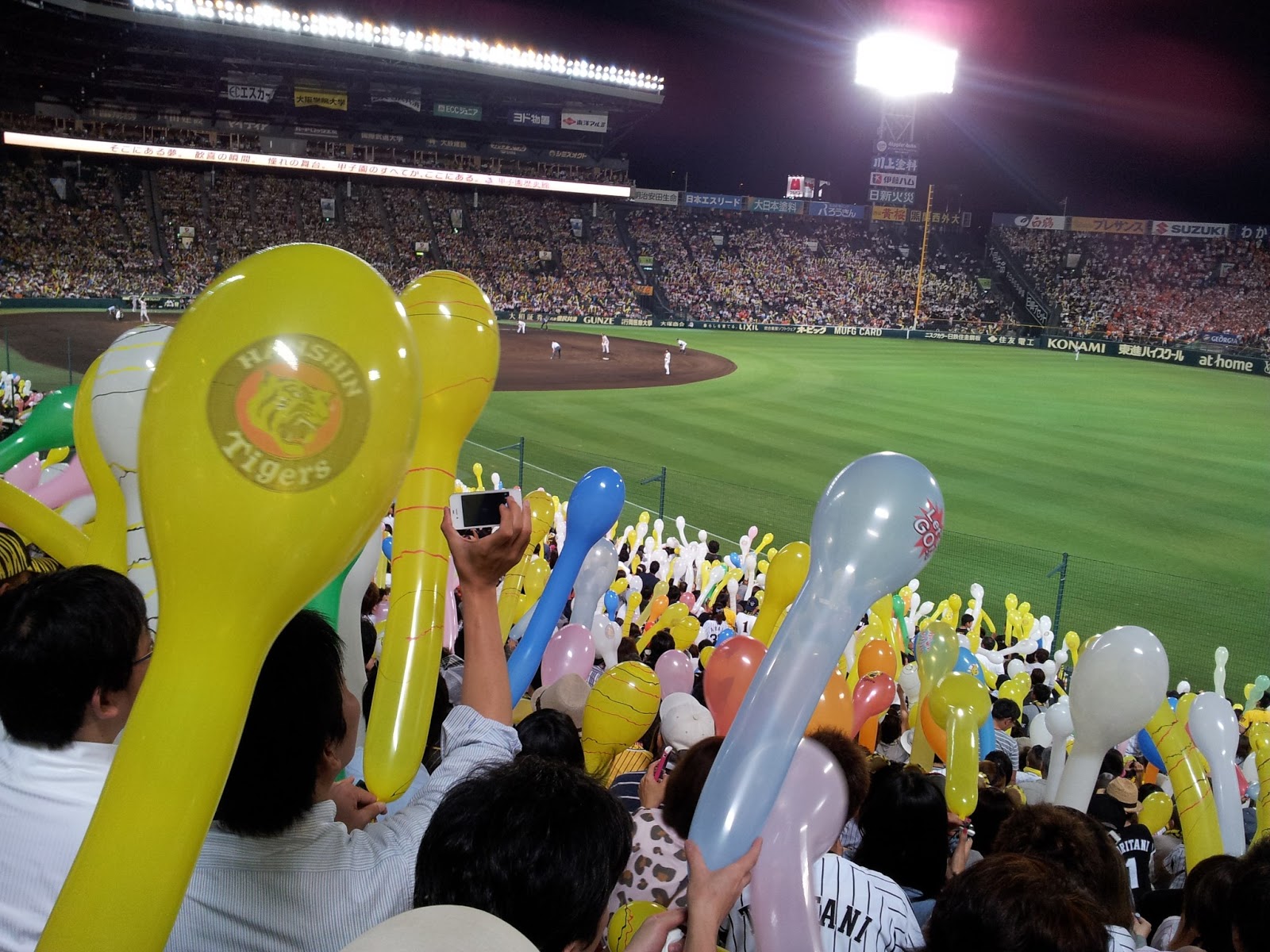
Baseball sounds very much American thing. However, I can assure you now that Japanese baseball game is more entertaining than that of the USA. The Hanshin Tigers baseball club in Hyogo, known as the Tigers, has Japan’s most passionate sporting supporters. Their famous home stadium Hanshin Koshien Stadium was built in 1924, where is also a famous ground of the National High School Baseball Championship. I’ll introduce some tips to enjoy baseball experience at the Hyogo’s most visited place with their biggest match of the season against the Yomiuri Giants.
 

26 June, 2013

Kobe Harborland: Umie

Big attraction in Kobe has opened last month. Kobe’s top tourist destination Kobe Haborland has added new tourist attractions into the area. New shopping mall Umie and Kobe Anpanman Children’s Museum has opened and become a new family day-out destination. I’d like to introduce a bit of it today, starting off at JR Sannomiya station.
 

30 April, 2013

Himeji: The Road to Engyo-ji Temple on Mt. Shosha.

Written by Yuka
 
Himeji Castle is undoubtedly the most iconic attraction of Himeji City, Hyogo. At present, the Japan’s greatest castle has been under five-year restoration process. Some of you, therefore, might hesitate to visit Himeji due to the construction. Well, Himeji is a gem and they have plenty to offer other than the castle. I’d like to introduce some of Himeji’s charms today. One place that is definitely worth a pilgrimage is Engyo-ji Temple on Mt. Shosha which is a film location of the Hollywood movie The Last Samurai. Here’s guide and some tips to enjoy a journey to the thousand-year old temple. 

 
Himeji can be easily reached by JR or Sanyo Railways from Kobe/Sannomiya or Osaka. When you get to JR Himeji Station, you’ll spot a nice tourist information center. Guides and maps of foreign languages, and Internet are available here. Friendly staff are on hand to offer you helpful advice and information to help you make the most of your trip.


Hungry in the morning?

05 March, 2013

Celebrate the Chinese New Year in Kobe Nankinmachi.

 
Hi readers! How did you celebrate the New Year's Day? China celebrates the Chinese New Year as the most important celebration in the Chinese calendar, letting off firecrackers and performing lion dances and dragon dances. Nankinmachi in Kobe has been hosting the Spring Festival with their own twist for the last 27 years.


The Chinese New Year’s Day of 2013 was February 10 and Nankinmachi held the festival from February 2 to 17. One of the highlights of the festival a parade featuring Chinese historical figures, in which people dress up in clothes and makeup from Beijing Opera or the Chronicle of the Three Kingdom, was held on February 10. There are some other great performances each day during the celebration.


Jalan Besar Community Club who won the Shanghai 4th World Dragon & Lion Dance Championships were invited to perform this year. Their 30 minutes stage was tremendously exciting. Even though it was a cold winter day here, the crowds were mesmerized by that performance.

Look how lively it was!

 
It really was like the dragon was alive! I saw the performance for the first time, and didn’t know how hard they worked inside of the dragon. Their teamwork was amazing.


Yummy part...
Mouthwatering Chinese foods on the street are something you can’t miss. There are limited foods exclusively available during the New Year’s celebration. There was also the New Year’s calligraphy. It was like a beautiful painting.


The Spring Festival  takes place every year in Nankinmachi, Kobe. Why don’t you join next year? Nankinmachi itself is open all year round, so you can enjoy the Chinatown at any time of the year.
 
Happy March,
Hana

28 January, 2013

Learn about the Great Hanshin-Awaji Earthquake

What comes to mind when you think of the city of Kobe? Many people probably think of the sophisticated modern city with western influences that it is today. When you look at this beautiful city, it’s hard to imagine what it looked like 18 years ago when a huge earthquake devastated Kobe and the surrounding areas at dawn on January 17, 1995 and more than 6,000 people lost their lives.

I would like to introduce the best places to learn about that event.
 
The Disaster Reduction and Human Renovation Institution (The Great Hanshin-Awaji Earthquake Memorial), located in Chuo ward in Kobe, provides real insight into the tragedy and how the city managed to recover from the effects of the earthquake to come back as one of the most beautiful cities in Japan. It also has plenty of resources on disaster management and an earthquake simulation theater, both of which have contributed a lot to national and international disaster risk reduction.
 
Disaster Reduction and Human Renovation Institution
 
Recreation of the earthquake’s aftermath
 

20 December, 2012

Hyogo souvenir collection: Banshu-ori Textiles


New serious “Hyogo souvenir collection” starts from this issue.
When you travel somewhere, picking up souvenir is always fun part of a journey. We would like to introduce some of the best local products in Hyogo in this series. Today, I’ll introduce the Hyogo’s top-end textiles Banshu-ori.


11 December, 2012

Takenaka Carpentry Tools Museum


Guest writers Kanae and Mariko who worked as summer interns write for this issue.

 Hi, everyone! We would like to introduce Takenaka Carpentry Tools Museum which is situated in Kobe Sannnomiya/Motomachi area. 


Takenaka Carpentry Tools Museum
This museum is Japan’s one and only museum that displays carpentry tools. Visitors can see the history, details of carpentry tools and reproductions of classic tools used for centuries in this country. Exhibitions are easy-to-follow and beautiful to see. There are visual touch screen navigations that allow you to study more about the tools.

28 November, 2012

Yokoo Tadanori Museum of Contemporary Art opened on Nov 3rd.


About Tadanori Yokoo


Tadanori Yokoo, born in Nishiwaki city in Hyogo, became an artist after working as a graphic designer for the Kobe Shimbun newspaper. He is an oil painter, book designer and writer. He won the Grand Prize at the 6th Paris Youth Biennal in 1969. Following this success, he has held exhibitions in New York, Hamburg, Amsterdam and Paris, and is recognized as one of Japan’s most successful artists.


Yokoo Tadanori Museum of Contemporary Art
The museum houses Yokoo’s world-renowned classic collections in addition to pieces by other artists who have worked alongside him. A whole range of special exhibitions related to Tadanori Yokoo will be held here from now on.


08 November, 2012

Hyogo’s best viewpoint: Takeda Castle Ruins

View from Ritsuunkyo


Requiring little or no introduction, Himeji Castle has always been Hyogo’s most iconic castle. However, it is the ruins of another castle in Hyogo that are drawing the limelight as a must-see site. Some doubt that ruins alone are worth a visit until they see the picture above. These are the Takeda Castle Ruins in Asago-city, Hyogo. With National Historic Site status, the ruins are attracting quite a few tourists from all over the country as a recently released Japanese movie was filmed there. The figure of visitors hit a record high this year and is expected to rise even further.

This site is also referred to as Japan’s Machu Picchu or “Castle in the Sky” due to its autumnal views surrounded by sea of clouds like the picture above. This sea of clouds can be seen in the early mornings during autumn (Sept- Nov) when there is a sharp temperature difference between day and night.

22 October, 2012

Art: Awaji Ningyo Joruri (Puppetry)


Hello everyone! I’ll introduce a traditional performing art in Awaji, Hyogo in this edition. Awaji Island is located in the Seto Inland Sea between the islands of Hoshu and Shikoku and has mild weather all year around.  The island can be easily accessed from Kobe in under an hour. Awaji is a resort island, offering delicious seafood and hot springs. As you can see from the picture, it is also a great place to see beautiful flowers.


15 October, 2012

Hyogo’s Best Viewpoints: Downtown Kobe


Hi everyone! I’d like to introduce some of the best viewpoints in Kobe in this edition. Hyogo’s main city has some truly amazing views.


If you are looking for a beautiful view of Kobe city, then be sure to visit the observatory deck at Kobe City Hall. It is located just five minutes’ walk from Sannomiya station and is surrounded by a number of buildings such as department stores and banks. As the tallest building in the area, it’s very easy to spot.


The 30-story Kobe City Hall is 132 meters tall and one of the best locations for looking out over the city. The observatory on the 24th floor is open to everyone for free. It provides a panoramic view of Kobe city including Mt. Rokko on the north side and Port Island to the south. You may be able to look out over Osaka Bay or the Kii Peninsula, Wakayama if you are lucky with the weather.


21 September, 2012

Royal Picture Gallery Mauritshuis exhibition starts Sept 29 in Kobe!


The Royal Picture Gallery Mauritshuis Special exhibition started on Saturday, September 29 in Kobe City Museum.

Have you heard of the museum Royal Picture Gallery Mauritshuis? Located in The Hague, Holland, this museum is known as a storehouse of art masterpieces including Dutch paintings. “What masterpieces?” I hear you ask. Here’s the one everyone recognizes!


Johannes Vermeer, Girl with a Pearl Earring (c.1665)
Royal Picture Gallery Mauritshuis 


11 September, 2012

Art: Histric Street Art Festival in Tamba Sasayama

Hi everyone! We start featuring art from this issue. Today, I’d like to introduce Historic Street Art Festival, also called Machinami Art Festival, held in Tamba Sasayama. This seven-day showcase transforms old houses into art galleries and takes place from 15  to 17 Sept. and 20 to 23 Sept. this year. 25 house galleries display potteries, paintings, sculptures and pictures works of total 32 artists. It is a stylish festival!


Masaaki Mizukami/Moldings

07 September, 2012

Hyogo’s Best Viewpoints: Kinosaki Hot Springs and the Observation Deck.

In this issue, we’ll be starting a new series about Hyogo’s best views. The first edition features Kinosaki Onsen Ropeway and observation deck/observatory. Kinosaki Onsen Ropeway (676m) opened in 1963. It runs between Kinosaki Hot Springs resort and the summit of Mt. Daishi.


This cable car will afford you sweeping vistas of Kinosaki town and the Sea of Japan. At the middle station, there is a temple called Onsen-ji and visitors who continue to the observatory at the mountaintop will be able to enjoy a great view of Kinosaki in any season.

23 August, 2012

Kanzaki Farm Park Yodel Forest


Hello, everyone! In this final issue of our amusement park series, I’d like to introduce a beautiful amusement park: Kanzaki Farm Park Yodel Forest. Located in the middle of Hyogo prefecture, the park is surrounded by natural forest, water and fresh air, just like a natural park on high plateau.


Alpacas, sheep, goats, horses, dogs and many more cute animals are waiting to meet you. Visitors will also be entertained by bird shows and dog shows (no dog shows during summer time for safety reasons). Visitors can also take the alpacas for a walk and get up close with the kangaroos. These opportunities do not come along very often!

27 July, 2012

Awaji Farm Park England Hill


Hello again!
In this 4th edition of our series introducing amusement parks, I’d like to introduce Awaji Farm Park England Hill. It has animals such as koalas and wallabies as well as an English garden and souvenir shops with local sweets. Visitors also have the opportunity to harvest vegetables and fruits.
To get there, simply take an express coach from Sannomiya bus terminal to Awaji Farm Park. It is a one and a half hour journey that takes you over the Akashi Kaikyo Bridge. The park is located right across from the Awaji Farm Park bus stop.


23 July, 2012

Let's enjoy Rokko mountain!


Hello everyone! Summer is upon us! Today, I’d like to introduce the natural theme park that is the Mt. Rokko area.


Rokko cable car has a panoramic view of Kobe city

Mt. Rokko is situated 30 minutes from Sannnomiya in Kobe, Hyogo’s capital city. Getting there using public transport could not be simpler.

On top of the mountain, there is a multitude of amusements such as Rokko-san Field Athletics, Rokko International Musical Box Museum, Rokko Alpine Botanical Garden and Japan’s first golf course. These facilities are well connected to each other (just a few minutes by car or bus/ 5 minutes on foot), so visitors can enjoy many attractions at a time.